
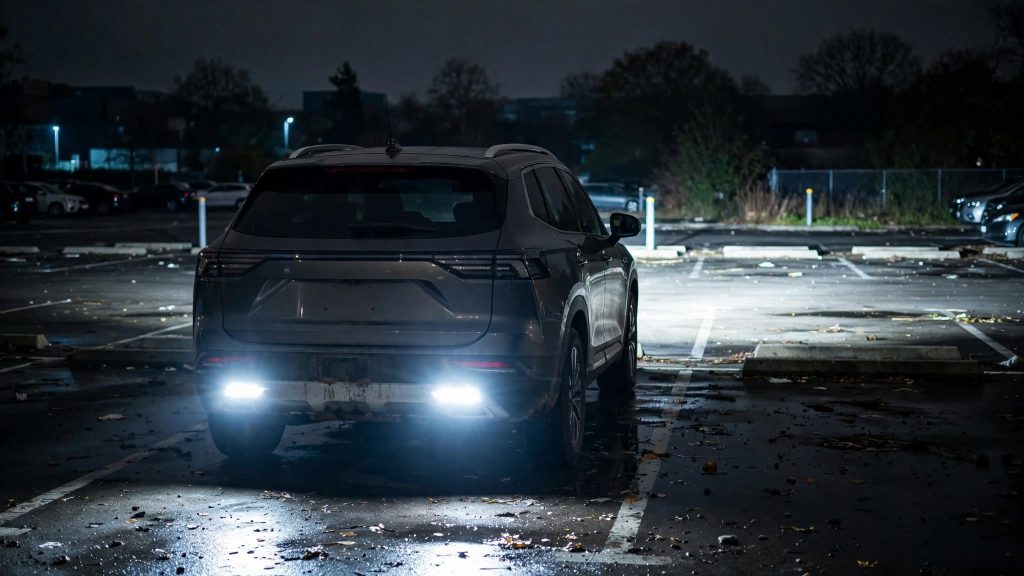
Reversing a vehicle often happens in places where visibility is already limited. A dark driveway, crowded parking area, narrow loading zone, or poorly lit worksite can make it difficult to see obstacles behind a vehicle. Standard reverse lights provide basic illumination, but their effectiveness can vary depending on the vehicle, lighting conditions, and surrounding environment.
LED reversing lights can provide clearer illumination behind a vehicle while using a compact and efficient lighting design. They can help drivers identify objects, pedestrians, curbs, equipment, and other potential hazards when backing up. For passenger vehicles, commercial vans, trucks, trailers, and utility vehicles, better rear visibility can make reversing easier and more controlled.
Why Visibility Matters When Reversing
Driving forward gives you a wide view through the windshield. Reversing is different because the vehicle itself creates blind spots. Mirrors and reversing cameras help, but both still depend on adequate lighting when conditions are dark.
Poor rear visibility can make it difficult to judge the distance between the vehicle and nearby objects. Small obstacles may be especially hard to notice on an unlit road, driveway, farm, or worksite.
LED reversing lights increase the amount of usable light behind the vehicle. Rather than simply making the rear of the vehicle visible to others, their main purpose is to illuminate the area the driver needs to inspect while moving backward.
How LED Reversing Lights Improve Rear Visibility
Clearer Illumination in Dark Areas
One of the main advantages of LED reversing lights is their ability to provide bright, immediate illumination when reverse gear is selected. This can make the ground, nearby structures, and obstacles easier to distinguish.
Clear rear lighting is particularly useful when reversing into a garage, navigating an unlit parking area, positioning a trailer, or backing a work vehicle around equipment.
The quality of the beam is just as important as brightness. A well-designed reversing light should illuminate a useful area rather than creating an intense spot of light in one location.
Better Support for Reversing Cameras
Rear-view cameras have become an important parking aid, but their image quality can suffer in very dark conditions. Additional rear illumination can help a camera capture a clearer view of the surroundings.
This can make parking lines, walls, posts, curbs, trailer components, and other objects easier to identify on the display. However, lighting should complement the camera rather than replace direct observation, mirrors, or other safe reversing practices.
LED Technology Suits Vehicle Applications
LEDs have several characteristics that make them practical for reversing lights. They reach useful brightness quickly and can produce strong illumination from relatively compact housings.
Their compact size also gives manufacturers flexibility when designing lights for different vehicles. Depending on the application, LED reverse lighting may be integrated into an existing rear lamp assembly or installed as an auxiliary reversing light.
The same practical lighting principles apply to vehicles and machinery used beyond normal road driving. Anyone comparing rear lighting with other task-oriented vehicle lighting may also find The Benefits of LED Work Lights for Construction, Farming, and Utility Vehicles useful when considering how targeted illumination supports visibility around working vehicles.
Where LED Reversing Lights Are Especially Useful
LED reverse lighting can be helpful in everyday driving, but certain situations make good rear illumination particularly valuable.
A driver returning home at night may need to reverse along a driveway with limited exterior lighting. A delivery van may frequently back into loading areas. Farm vehicles can operate around sheds, gates, trailers, and machinery after daylight hours. Utility vehicles may also need to maneuver around equipment in areas without permanent lighting.
In each case, the goal is similar: illuminate the space behind the vehicle clearly enough to help the driver understand what is there.
Choosing the Right Beam Pattern
Brightness alone should not determine whether a reversing light is suitable. Beam pattern affects how useful that brightness becomes.
A wider beam can help illuminate the sides of the reversing path and may be useful for parking, loading areas, or maneuvering around equipment. A more concentrated beam can illuminate farther behind the vehicle but may provide less coverage close to its sides.
Placement also matters. Poorly positioned auxiliary lights can create glare or illuminate an area that does little to improve the driver’s actual view.
Important Installation Considerations
Before upgrading LED reversing lights, check that the lighting setup is suitable for the specific vehicle and intended use. Electrical compatibility, mounting position, wiring, weather protection, and local vehicle-lighting rules should all be considered.
Some modern vehicles monitor exterior lighting circuits electronically. Changing the original bulb type or adding auxiliary lights without considering the electrical system can sometimes lead to warning messages or unexpected behavior.
Auxiliary reversing lights also need secure mounting and correctly protected wiring, particularly on trucks, trailers, agricultural equipment, and vehicles regularly exposed to water, mud, vibration, or debris.
Avoiding Excessive Brightness and Glare
More light is not automatically better. An excessively bright or badly aimed reversing light can cause glare for pedestrians or other drivers and may reduce useful contrast in a reversing camera.
The objective should be balanced illumination across the area where visibility is needed. Correct positioning and aiming can often be as important as the output of the light itself.
Drivers should also keep reversing lamps and camera lenses clean. Dirt, road spray, snow, and mud can reduce the effectiveness of even a well-designed lighting system.
LED Reversing Lights Are an Aid, Not a Replacement for Awareness
Improved lighting cannot remove every reversing hazard. Blind spots still exist, and people or objects can enter the vehicle’s path unexpectedly.
Drivers should continue using mirrors, cameras, parking sensors where fitted, and direct visual checks. When visibility is severely restricted, additional assistance may be appropriate, especially when maneuvering large commercial or utility vehicles.
LED reversing lights work most effectively as one part of a broader approach to safe vehicle movement.
Conclusion
LED reversing lights can make nighttime and low-light maneuvering easier by providing clearer illumination behind a vehicle. They can help drivers identify obstacles, improve the usefulness of reversing cameras, and provide better visibility in driveways, parking areas, loading zones, farms, and worksites.
Choosing an appropriate beam pattern, positioning the lights correctly, and ensuring proper electrical installation are just as important as brightness. When combined with mirrors, cameras, careful observation, and sensible reversing practices, LED reverse lighting can be a practical way to improve visibility where drivers often need it most.