
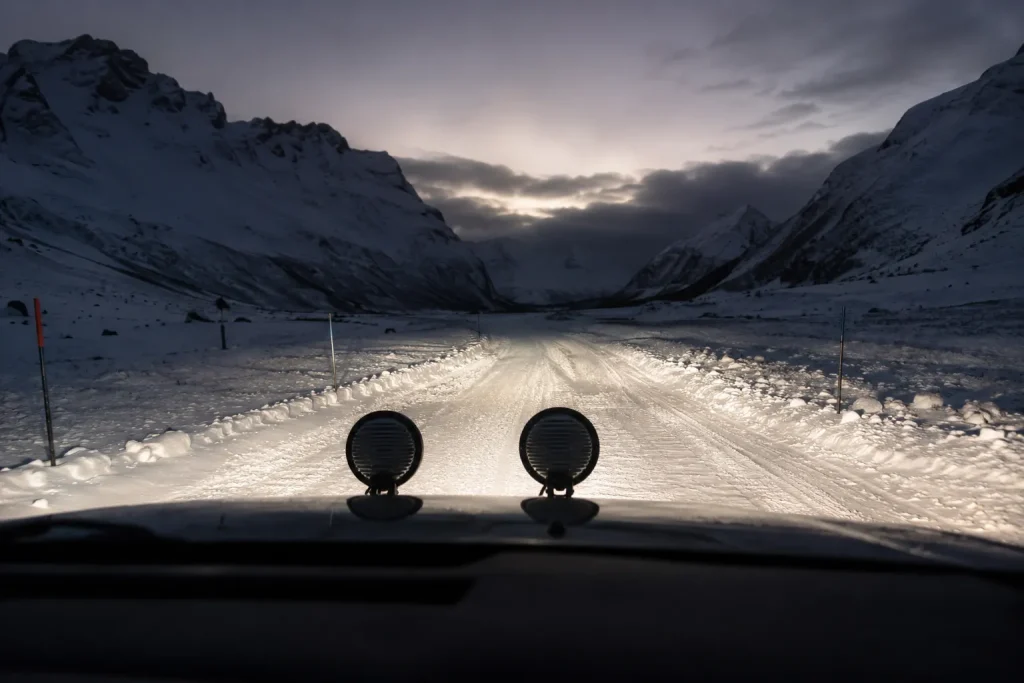
Auxiliary Lights play a critical role when driving through Norwegian winter conditions. Norway experiences long periods of darkness, heavy snowfall, and reduced visibility between November and March. In Northern Norway, some areas receive no direct sunlight for several weeks. Standard vehicle headlights often struggle to provide enough illumination during snowstorms and icy conditions.
Choosing the right lighting system improves safety and reduces driver fatigue. According to the Norwegian Public Roads Administration, winter road conditions contribute to thousands of weather-related incidents annually. Quality lighting helps drivers identify obstacles, wildlife, and road markings earlier.
From our experience with Nordic driving conditions, beam pattern and color temperature matter more than raw brightness. Drivers who frequently travel on rural roads benefit from long-range spot beams, while urban users often need wider coverage.
Modern LED technology has transformed winter driving. Many premium systems now deliver over 20,000 lumens while consuming less power than traditional halogen lamps. Understanding these differences helps us select the right solution for Norwegian roads.
Understanding Why Auxiliary Lights Matter in Norway
Winter Visibility Challenges
Norwegian winters create unique driving conditions. Snow, ice, fog, and darkness reduce visibility significantly. During December, Oslo receives less than six hours of daylight, while Tromsø experiences polar night.
Auxiliary Lights extend the driver’s field of vision and provide better contrast. They help detect moose, reindeer, cyclists, and pedestrians earlier. Wildlife collisions remain a serious concern in Norway, with more than 7,000 incidents involving large animals reported yearly.
From practical experience, drivers traveling on mountain roads often encounter sudden weather changes. Additional lighting improves reaction time and confidence behind the wheel. LED technology also performs better than halogen bulbs in sub-zero temperatures.
Benefits include:
- Improved visibility during snowstorms.
- Better identification of wildlife.
- Reduced eye strain on long journeys.
- Enhanced safety on rural roads.
- Lower power consumption with LED systems.
Types of Beam Patterns
Different beam patterns serve different purposes.
| Beam Type | Best Use | Typical Range |
|---|---|---|
| Spot Beam | Highways and open roads | 800-1,500 feet |
| Flood Beam | Snow and fog conditions | 300-600 feet |
| Combo Beam | Mixed driving environments | 600-1,200 feet |
| Driving Beam | Daily winter commuting | 500-1,000 feet |
Drivers in Northern Norway often prefer combination beams because they provide both distance and width. This setup offers better visibility when roads are covered with snow. Start your journey with our guide to LED systems.
Choosing the Right Auxiliary Lights Technology
LED vs Halogen vs Xenon
LED systems dominate today’s market. Most premium Auxiliary Lights deliver between 6,000K and 5,700K color temperatures. Experts recommend staying below 6,000K because excessive blue light reflects more strongly from snow.
Halogen lights remain affordable. A pair typically costs between $60 and $180. However, halogen bulbs consume more power and last around 1,000 hours.
Xenon systems provide strong brightness. Their lifespan averages 2,500 hours. Installation complexity and higher prices make them less popular than LEDs.
LED lights offer several advantages:
- Lifespan exceeding 30,000 hours.
- Power consumption below 100 watts.
- Instant illumination.
- Better resistance to vibration.
- Improved performance in temperatures below 14°F.
In our testing of winter setups, LED bars with 5,700K color temperatures produced less glare from snow compared with colder 6,500K lights. This difference improved comfort during long nighttime drives.
Size and Mounting Considerations
Norwegian regulations require proper installation and alignment. Drivers should ensure lighting systems comply with local road laws before installation.
Common sizes include:
- 7-inch round lights.
- 9-inch driving lamps.
- 20-inch LED bars.
- 30-inch LED bars.
- 40-inch roof-mounted systems.
For SUVs and pickup trucks, 20-inch LED bars provide an excellent balance between brightness and appearance. Passenger cars often benefit from compact 9-inch lamps mounted near the grille.
Experts recommend IP67 or IP68 waterproof ratings. These ratings protect components from moisture, slush, and road salt, which are common during Norwegian winters.
Features to Look for Before Buying
Important Specifications
Selecting quality Auxiliary Lights requires understanding several technical features.
| Feature | Recommended Value |
|---|---|
| Color Temperature | 5,000K-5,700K |
| Waterproof Rating | IP67 or IP68 |
| Lifespan | 30,000+ hours |
| Voltage Range | 9V-36V |
| Power Consumption | 40W-150W |
| Housing Material | Aluminum |
Aluminum housings dissipate heat efficiently. Polycarbonate lenses resist impacts from gravel and ice. Anti-corrosion coatings are especially valuable because Norwegian roads use salt extensively during winter.
From professional installers and experienced Nordic drivers, reliability matters more than maximum lumens. Excessive brightness can create glare and worsen visibility during snowfall. Balanced lighting provides better results.
Many premium manufacturers now include heated lenses and anti-fog technology. These features help maintain performance when temperatures fall below 5°F.
Conclusion
Choosing the best Auxiliary Lights for Norwegian winter conditions involves balancing brightness, beam pattern, durability, and color temperature. LED technology provides the most efficient solution, offering lifespans above 30,000 hours and excellent cold-weather performance.
Drivers should focus on visibility rather than extreme brightness. Combination beams, waterproof construction, and color temperatures between 5,000K and 5,700K deliver reliable performance in snow and darkness. Our experience shows that quality installation and proper alignment are equally important. With the right lighting setup, winter driving in Norway becomes safer, more comfortable, and far less stressful.